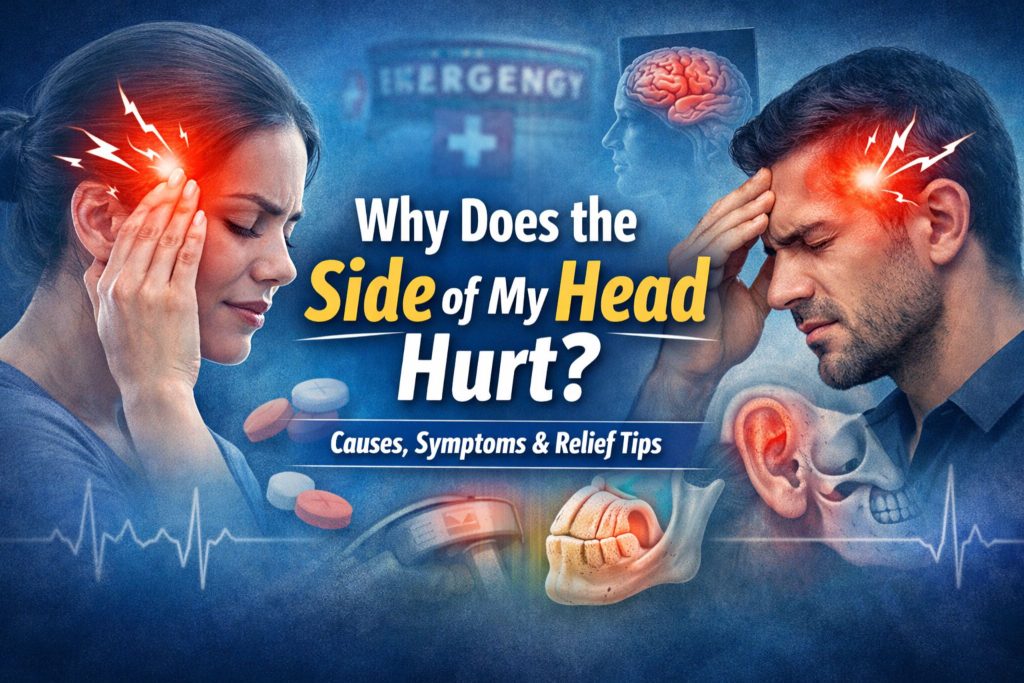
Pain on the side of your head can feel annoying, distracting, or sometimes scary—especially if it’s new or more intense than usual. The good news is that many causes are not dangerous and improve with rest, hydration, stress reduction, or the right over-the-counter medication. But in some cases, one-sided or side-of-head pain can be a sign you should get medical care quickly.
“Side of my head” pain usually points to one of a few buckets:
Primary headaches (the headache is the condition): migraine, tension-type headache, cluster headache
Referred pain (something nearby irritates nerves): jaw joint (TMJ), neck muscles, ear problems, dental issues
Inflammation or infection: sinus infection, shingles, temporal arteritis
Emergency causes (rare but urgent): stroke symptoms, sudden “worst headache,” head injury complications
This guide will help you narrow down what’s most likely based on how it feels, where it hurts, and what else is happening.
Important: This article is for education, not diagnosis. If you have severe symptoms or feel unsafe, seek urgent care.
Quick self-check: what does your pain feel like?
Use these descriptions to get oriented:
Throbbing or pulsing (often with nausea/light sensitivity) → commonly migraine
Tight, pressing, “band-like”, sometimes with neck tension → commonly tension headache
Severe stabbing around eye/temple, with watery eye or runny nose → cluster headache
Ache near temple + jaw pain when chewing → possible TMJ or (in older adults) temporal arteritis
Sharp, electric “zaps”, scalp tenderness, pain triggered by touching hair/scalp → possible occipital neuralgia
Pressure with face pain, congestion, worse when bending → possible sinus-related headache
Pain with ear fullness/tooth pain/sore jaw → ear or dental causes
Side-of-head pain: symptoms-to-cause table (fast guide)
| What you notice | Likely causes | Helpful next step |
|---|---|---|
| One-sided throbbing + nausea, light sensitivity | Migraine | Rest in dark room, hydration, early pain relief |
| Tight pressure + stress/poor posture + neck ache | Tension-type | Stretching, heat/ice, sleep, stress reduction |
| Extreme pain around one eye + tearing/runny nose | Cluster headache | Medical evaluation; targeted meds may be needed |
| Temple pain + jaw clicking/grinding | TMJ disorder | Jaw rest, soft foods, dentist evaluation |
| Pain behind/near ear + neck tightness | Occipital neuralgia or neck strain | Posture work, gentle neck care, clinician if persistent |
| Face pressure + congestion + worse bending | Sinus inflammation/infection | Saline rinse, hydration; see clinician if fever/severe |
| New severe headache after injury | Concussion/bleed risk | Urgent medical evaluation |
| Sudden “worst headache,” neuro symptoms | Emergency | Call emergency services |
Common causes of pain on the side of the head
1) Migraine (very common)
Migraine is one of the top reasons people feel pain on one side or the side of the head. It’s not “just a bad headache”—it’s a neurological condition that can cause:
throbbing or pulsing pain (often one-sided)
nausea or vomiting
sensitivity to light, sound, or smells
visual changes (aura) in some people
fatigue and brain fog
Triggers can include missed meals, dehydration, lack of sleep, stress let-down, alcohol, hormonal shifts, strong smells, and certain foods.
What you can do at home
Take your usual pain reliever early (timing matters for migraine).
Hydrate and eat something simple (low nausea risk).
Try a cold pack on the painful area and rest in a dark, quiet room.
If you get migraines often, keep a trigger diary (sleep, stress, food, hydration).
See a clinician if migraines are frequent, worsening, or interfering with life—preventive options can help.
2) Tension-type headache (stress + muscles)
Tension headaches often feel like a dull pressure or tightness. Many people describe it as:
“a clamp,” “band,” or “vise” sensation
pain that can sit at the temples/side of head
neck and shoulder tightness
Common contributors
long screen time, poor posture
stress, anxiety
jaw clenching
dehydration or missed meals
poor sleep
At-home relief
Gentle neck/shoulder stretches (slow, no forcing)
Heat on the neck/shoulders or a warm shower
Short breaks from screens; adjust monitor height
Hydration + balanced meal
Relaxation breathing (even 3–5 minutes helps)
3) Cluster headache (severe, urgent-to-treat)
Cluster headaches are less common but very distinctive. Pain is often:
extremely severe
around one eye/temple/side of head
short-lasting (15 minutes to a few hours) but recurring in “clusters”
accompanied by watery eye, runny nose, or eyelid droop on the same side
If this matches your symptoms, it’s worth seeing a clinician quickly because cluster headaches have specific treatments that work far better than typical painkillers.
4) TMJ disorder (jaw joint) and jaw clenching
If the side of your head hurts near the temple and you also notice:
jaw clicking/popping
pain when chewing
morning headaches (from nighttime clenching/grinding)
sore jaw muscles
…it may be your temporomandibular joint (TMJ). TMJ-related pain can radiate to the temple, ear area, and side of the head.
Helpful steps
Soft foods for a few days; avoid gum
Warm compress on jaw muscles
Don’t “test” your jaw by opening wide repeatedly
Consider a dental evaluation if grinding/clenching is suspected
5) Neck strain and occipital neuralgia (nerve irritation)
The occipital nerves run from the upper neck to the scalp. When irritated, pain can feel like:
sharp, shooting, or electric zaps
tenderness at the base of the skull
pain that spreads to one side of the head or behind the ear
This can be linked to posture strain (especially “tech neck”), muscle tightness, arthritis changes, or sometimes after an injury.
Try
posture resets: shoulders down/back, screen at eye level
gentle neck mobility (no aggressive cracking)
heat on tight neck muscles
clinician visit if pain is persistent, severe, or has numbness/weakness
6) Sinus inflammation or infection
Sinus-related pain is often described as pressure, usually with:
congestion or thick nasal discharge
facial pain/tenderness
worse pain when bending over
sometimes fever (more suspicious for infection)
Note: many “sinus headaches” are actually migraines, but sinus symptoms can still be real.
What helps
saline nasal rinse or spray
steam inhalation
hydration
medical evaluation if fever, severe facial pain, or symptoms last more than ~10 days or worsen after improving
7) Ear or dental problems (referred pain)
Pain can travel. An ear infection, earwax blockage, tooth infection, or impacted tooth can radiate to the side of the head.
Clues include:
ear fullness, hearing changes, fever, drainage
tooth sensitivity, gum swelling, pain when biting
pain localized near the jaw angle
If you suspect dental/ear causes, treat the source—head pain often improves once the underlying issue is managed.
8) Temporal arteritis (giant cell arteritis) — do not ignore
This is more relevant typically in adults over 50. Symptoms can include:
new headache near the temples (often one side)
scalp tenderness
jaw pain when chewing
vision changes
This can threaten vision and needs urgent medical evaluation.
9) Shingles (especially near scalp/temple)
Early shingles can cause burning or tingling pain on one side before a rash appears. If you notice sensitivity and then a blister-like rash, see a clinician promptly—antiviral medication works best early.
When to worry: red flags that need urgent care
Get emergency help immediately if you have side-of-head pain with any of the following:
sudden “worst headache of my life”
weakness, numbness, facial droop, confusion, trouble speaking
fainting, seizure, severe dizziness
new headache after head injury
stiff neck with fever
vision loss or sudden severe eye pain
headache triggered by exertion/coughing that’s new and intense
If the headache is persistent, progressively worsening, or different from your usual pattern, a medical evaluation is a smart move.
How to relieve side-of-head pain at home (safe basics)
These are generally safe for many people, but individual situations vary:
Hydrate + eat something light
Dehydration and low blood sugar commonly worsen headaches.Cold or heat
Cold pack: helpful for migraine/throbbing pain
Heat: helpful for tension and muscle-related pain
Reduce sensory load
Dim lights, reduce noise, limit screen time during a flare.Gentle stretches (if tension/neck related)
Slow neck rolls are often too aggressive—try gentle side bends and shoulder rolls.Sleep
A short nap can help migraine; consistent nightly sleep prevents recurrence.OTC pain relief (use carefully)
Follow label directions and avoid frequent use (regular overuse can cause rebound headaches). If you need painkillers many days per week, talk to a clinician.
Prevention tips (especially if it keeps coming back)
Sleep schedule: consistent bedtime/wake time
Hydration habit: water through the day, not only when thirsty
Posture breaks: 2–3 minute breaks every 30–60 minutes at screens
Stress downshift: quick daily practice (walk, breathing, stretching)
Jaw check: if you clench, consider stress tools + dental advice
Track patterns: note triggers, time, foods, cycle changes, workouts
FAQs
Is it normal to have a headache on only one side?
Yes. Many common headaches, especially migraines and cluster headaches, can be one-sided. But if it’s new, severe, or paired with neurological symptoms, get evaluated.
Why does the right temple hurt?
Right temple pain can come from migraine, tension headaches, jaw clenching/TMJ, neck strain, or sinus/eye strain issues. If it’s new and severe—especially with vision changes—seek care.
Why does the left side of my head hurt near my ear?
Pain near the ear can be TMJ problems, ear infections, dental issues, neck/occipital nerve irritation, or migraine. Look for ear symptoms (fullness, hearing change) and jaw symptoms (clicking, chewing pain).
Can stress cause pain on the side of the head?
Yes. Stress can trigger tension headaches and migraines, and it can also increase jaw clenching, which irritates the temple/side-of-head area.
When should I see a doctor for side-of-head pain?
See a clinician if headaches are frequent, worsening, disrupting life, or if you’re relying on pain meds often. Seek emergency help for sudden severe headache, neuro symptoms, fever/stiff neck, or vision changes.
Related posts:
 AI Mental Health: Smarter Emotional Wellness in 2026
  What Is the Average Height for Men in the US? (2026 Update)
  Bad Mental Health: Understanding, Managing, and Overcoming Emotional Struggles in 2026
  Pea vs Whey Protein: What You Need to Know in 2026
  Articles About Mental Health: What Everyone Should Know in 2026
  Bioma Reviews 2026 – Is This Gut Health Supplement Worth It?
  Nutrafol Reviews 2026 – Does This Hair Growth Supplement Really Work?
  Il Makiage Reviews 2026: Real Results, Shade Match & Before-After Guide
  When Is the Best Time to Take Creatine? (Updated 2026 Guide)