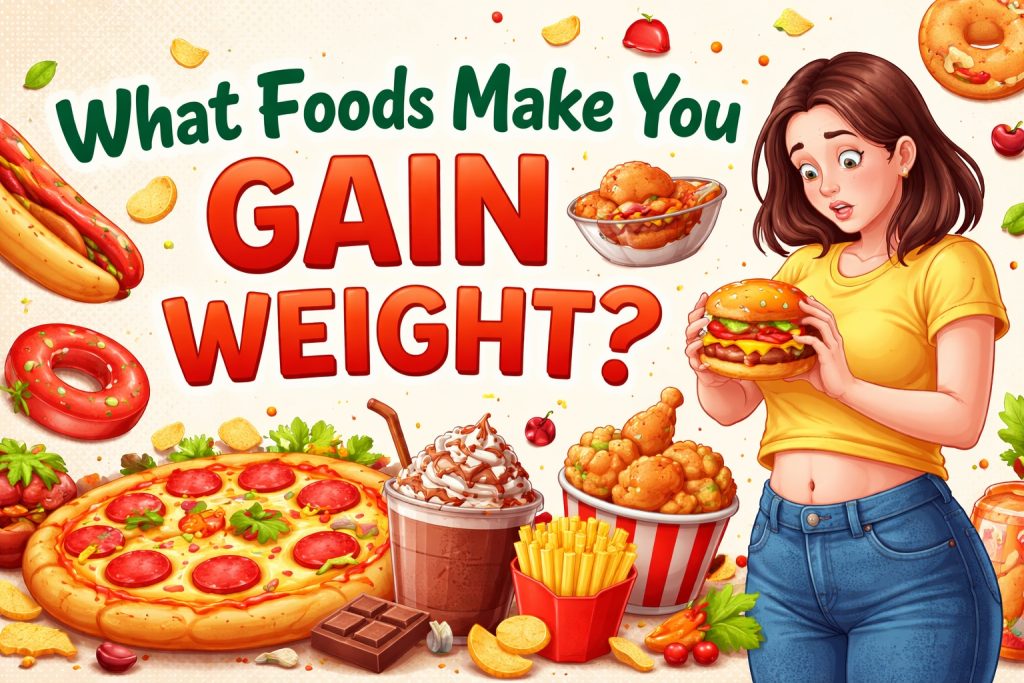
If you’re wondering what foods make you gain weight, the simple answer is this: weight gain happens when you consistently consume more calories than your body burns. However, some foods make that calorie surplus happen much faster because they are high in calories, low in nutrients, and easy to overeat.
This guide explains the most common foods that cause weight gain, why they lead to fat gain, and what you can eat instead — without extreme dieting.
Why Certain Foods Lead to Weight Gain
Not all calories affect hunger and fullness the same way. Some foods contribute to weight gain more easily because:
They are calorie-dense (a small portion contains many calories)
They are low in fiber and protein, so they don’t keep you full
They combine sugar, fat, and salt — making them highly addictive
They are liquid calories, which don’t satisfy hunger
They are heavily processed and easy to overeat
Understanding this makes it easier to control weight without cutting out entire food groups.
17 Foods That Make You Gain Weight
1. Sugary Soft Drinks
Soda is one of the biggest contributors to weight gain. It contains large amounts of added sugar and provides almost no satiety. Since liquid calories don’t make you feel full, you often consume them on top of regular meals.
Better option: Sparkling water with lemon, herbal tea, or water infused with fruit.
2. Sweetened Coffee Drinks
Flavored lattes, frappes, and specialty coffee drinks can contain as many calories as a full dessert. Syrups, whipped cream, and sweetened milk quickly increase daily calorie intake.
Better option: Black coffee, Americano, or a latte without added syrups.
3. Pastries and Baked Goods
Donuts, cakes, muffins, and cookies are high in refined flour, sugar, and unhealthy fats. They are calorie-dense and easy to overeat, making them common items on any fattening foods list.
Better option: Greek yogurt with berries or a small portion paired with protein.
4. French Fries and Fried Foods
Deep-frying significantly increases calorie content because foods absorb oil. Fried chicken, fries, and other deep-fried snacks are common high calorie foods to avoid when trying to manage weight.
Better option: Air-fried or baked alternatives.
5. Fast Food Meals
Burgers, pizza, and combo meals are typically high in calories, refined carbs, and fats. The problem is often the portion size and added sides like fries and sugary drinks.
Better option: Choose grilled items, skip sugary beverages, and control portion sizes.
6. Potato Chips and Packaged Snacks
Chips are highly processed and designed to be addictive. It’s very easy to eat multiple servings without noticing.
Better option: Portion-controlled snacks, air-popped popcorn, or roasted chickpeas.
7. Ice Cream
Ice cream combines sugar and fat, making it calorie-dense and easy to overconsume.
Better option: Frozen yogurt, fruit-based desserts, or smaller servings.
8. Candy and Chocolate Bars
While small portions can fit into a balanced diet, frequent candy consumption can contribute to steady weight gain.
Better option: Dark chocolate in moderation or fresh fruit.
9. White Bread and Refined Grains
Refined carbs digest quickly and can cause blood sugar spikes, leading to increased hunger shortly after eating.
Better option: Whole grain bread, oats, brown rice, or quinoa.
10. Sugary Breakfast Cereals
Many cereals contain high amounts of added sugar and very little fiber or protein.
Better option: Oatmeal with nuts and seeds, or eggs with whole grain toast.
11. “Low-Fat” Processed Foods
When fat is removed, sugar is often added to improve taste. This can make low-fat snacks surprisingly high in calories.
Better option: Whole, minimally processed foods.
12. Processed Meats
Sausages, bacon, and salami are calorie-dense and often eaten with refined carbs.
Better option: Lean meats, eggs, beans, and lentils.
13. Alcohol
Alcohol contains empty calories and may increase appetite, leading to overeating.
Better option: Limit intake and alternate with water.
14. Trail Mix and Nuts (Overeating Them)
Nuts are healthy but calorie-dense. Eating directly from the container can lead to consuming several servings.
Better option: Pre-portion a small handful.
15. Cooking Oils and Butter
Oils are pure fat, meaning they contain a high number of calories per tablespoon. It’s easy to add extra oil while cooking without realizing it.
Better option: Measure oils carefully and use non-stick cookware.
16. Ultra-Processed Foods
Highly processed packaged meals and snacks are designed to be convenient and tasty, often leading to overeating.
Better option: Prepare simple home-cooked meals using whole ingredients.
17. Oversized Restaurant Portions
Restaurant meals often contain more calories than home-cooked meals due to larger portions and added oils.
Better option: Share meals or take half home.
Why Am I Gaining Weight Even When I Eat Less?
Many people ask this question. Possible reasons include:
Hidden liquid calories
Frequent snacking
Large portion sizes
Eating calorie-dense “healthy” foods
Low protein intake
Lack of physical activity
Tracking portion sizes for a short period can reveal hidden calorie sources.
How to Prevent Weight Gain (Simple Steps)
You don’t need extreme diets. Try these practical habits:
Reduce sugary drinks.
Increase protein at each meal.
Add fiber from vegetables and whole grains.
Portion snacks instead of eating from packages.
Cook more meals at home.
Stay physically active.
Consistency matters more than perfection.
Frequently Asked Questions
What foods make you gain weight fast?
Sugary drinks, fried foods, processed snacks, pastries, and high-calorie fast foods are common contributors.
Do carbs cause weight gain?
Carbs alone do not cause weight gain. Overeating refined carbs and excess calories leads to fat gain.
Can healthy foods cause weight gain?
Yes, if eaten in large quantities. Foods like nuts, avocado, and oils are nutritious but calorie-dense.
What is the biggest cause of weight gain?
Consistently consuming more calories than your body burns.
Final Thoughts
Understanding what foods make you gain weight helps you make smarter daily decisions. The key is not eliminating foods entirely but controlling portions and focusing on nutrient-dense options.
Small changes — like replacing sugary drinks, measuring cooking oils, and reducing processed snacks — can prevent unwanted weight gain over time.
Related posts:
 What Is the Average Height for Men in the US? (2026 Update)
  Bad Mental Health: Understanding, Managing, and Overcoming Emotional Struggles in 2026
  Pea vs Whey Protein: What You Need to Know in 2026
  Articles About Mental Health: What Everyone Should Know in 2026
  Bioma Reviews 2026 – Is This Gut Health Supplement Worth It?
  Nutrafol Reviews 2026 – Does This Hair Growth Supplement Really Work?
  Il Makiage Reviews 2026: Real Results, Shade Match & Before-After Guide
  Primal Queen Reviews 2026: Is It Worth the Hype? A Complete Guide for Global Consumers
  What Is a Bad Heart Rate? A Complete 2026 Guide for All Ages