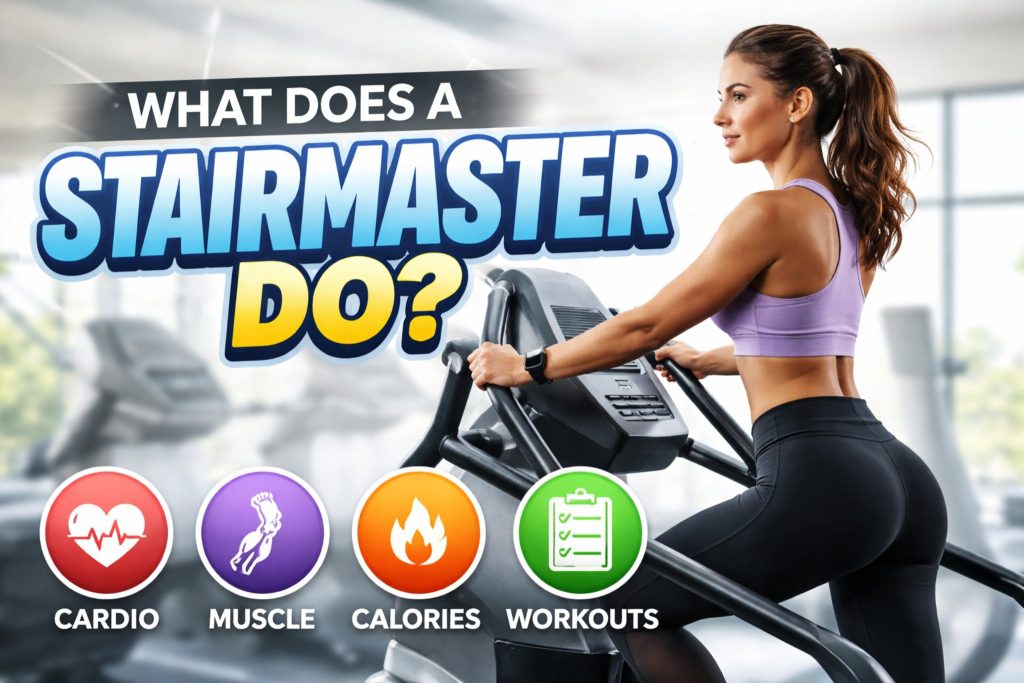
If you’ve ever stepped onto a StairMaster machine, you probably felt the intensity within minutes. Your legs start working, your breathing increases, and your heart rate climbs fast. But beyond the sweat and heavy breathing, what does a StairMaster do for your body?
A StairMaster (also known as a stair climber) simulates continuous stair climbing. Unlike walking on flat ground, every step requires you to lift your body weight upward. That simple motion makes it one of the most efficient cardio machines in the gym.
In this complete guide, you’ll learn:
What the StairMaster actually does to your body
The main muscles worked
How many calories it burns
Proper form to avoid injury
Beginner and fat-loss workouts
Common mistakes to avoid
Let’s break it down clearly and practically.
What Is a StairMaster?
A StairMaster is a cardio machine with rotating steps that move downward while you climb upward. It mimics climbing an endless staircase. You can control the speed and resistance level, which adjusts the intensity of your workout.
Unlike treadmills or bikes, the StairMaster forces you to work against gravity continuously. That’s why it often feels harder in a shorter amount of time.
What Does a StairMaster Do for Your Body?
The StairMaster provides a combination of cardiovascular conditioning and lower-body strengthening. Here’s what it does in detail:
1. Improves Cardiovascular Fitness
One of the primary benefits of the StairMaster is improving heart and lung health. Because stair climbing is an aerobic activity, your heart must pump more oxygen-rich blood to your working muscles.
Over time, consistent use can:
Improve stamina
Increase endurance
Strengthen your heart
Improve oxygen efficiency
If you often feel out of breath during physical activity, adding StairMaster sessions to your weekly routine can significantly improve your conditioning.
2. Strengthens Lower Body Muscles
The StairMaster heavily targets the lower body because every step involves pushing your body weight upward.
Primary Muscles Worked:
Glutes (buttocks)
Quadriceps (front of thighs)
Hamstrings (back of thighs)
Calves
Unlike flat walking, stair climbing activates your glutes more effectively due to the vertical movement pattern. This makes it especially popular for those looking to tone or strengthen their legs and glutes.
3. Engages Core Muscles
Even though it’s a lower-body-focused machine, your core plays an important role. Your abdominal and lower back muscles help stabilize your torso while stepping continuously.
If you avoid leaning heavily on the handrails, you’ll naturally engage your core more, improving balance and posture over time.
4. Burns Calories Efficiently
Many people use the StairMaster for weight loss because it can burn a significant number of calories in a short period.
On average:
A 30-minute StairMaster session can burn approximately 180–300 calories, depending on body weight and intensity.
Higher resistance levels and interval training can increase calorie burn.
Because the movement is continuous and gravity-based, the intensity ramps up quickly, making it a time-efficient cardio option.
5. Supports Weight Loss Goals
The StairMaster helps create a calorie deficit when combined with proper nutrition. While it does not specifically target belly fat, it contributes to overall fat loss.
Fat loss occurs throughout the body, not in one specific area. Consistent workouts combined with balanced eating will produce noticeable results over time.
6. Builds Muscular Endurance
Unlike traditional weightlifting, the StairMaster focuses on muscular endurance rather than maximum strength.
You’ll notice:
Improved ability to sustain effort
Reduced leg fatigue during daily activities
Better performance in other exercises
This makes it useful for athletes, hikers, and anyone wanting stronger, more resilient legs.
7. May Be Lower Impact Than Running
Compared to high-impact activities like running, the StairMaster can be gentler on joints for many people. There’s no harsh pounding motion like road running.
However, proper form is essential. Incorrect posture or excessive leaning can still place strain on knees.
StairMaster Muscles Worked (Detailed Breakdown)
Let’s look deeper at how each muscle group functions during a session.
Glutes
The glutes extend the hips and help push your body upward. Driving through your heels increases glute activation.
Quadriceps
These muscles straighten your knees as you step upward.
Hamstrings
They assist in hip extension and help stabilize the knee joint.
Calves
Calves assist with ankle movement and push-off during each step.
Core Muscles
The abdominal muscles and lower back stabilize your upper body throughout the workout.
How Many Calories Does the StairMaster Burn?
Calorie burn varies depending on:
Body weight
Intensity level
Workout duration
Fitness level
Whether you use handrails
Here’s a general estimate for 30 minutes:
125 lbs: 180–220 calories
155 lbs: 220–260 calories
185 lbs: 250–300+ calories
Interval training typically increases calorie burn compared to steady pace workouts.
Remember: consistency matters more than a single intense session.
Proper StairMaster Form (To Avoid Knee Pain)
Good technique improves results and reduces injury risk.
1. Stand Upright
Keep your chest lifted and shoulders relaxed. Avoid slouching.
2. Slight Forward Lean from the Hips
Lean slightly forward at the hips, not by rounding your back.
3. Full Foot on Each Step
Place most of your foot on the step rather than balancing on your toes.
4. Drive Through Your Heels
This increases glute engagement and reduces stress on knees.
5. Light Grip on Rails
Use handrails for balance only. Don’t support your full body weight with your arms.
Beginner StairMaster Workout Plan (20 Minutes)
If you’re new, start simple.
Warm-Up (5 Minutes)
Easy pace, focus on posture and rhythm.
Main Workout (10 Minutes)
2 minutes moderate pace
1 minute easy recovery
Repeat 3 times.
Cool Down (5 Minutes)
Slow pace, steady breathing.
Frequency: 2–3 times per week.
Intermediate Fat-Burning Workout (25 Minutes)
Warm-Up (5 Minutes)
Interval Set (15 Minutes)
Repeat 5 times:
1 minute high intensity
2 minutes recovery
Cool Down (5 Minutes)
Intervals improve cardiovascular fitness and increase calorie burn efficiently.
Glute-Focused StairMaster Routine
To emphasize glutes:
Maintain upright posture
Push through heels
Slightly slow your pace for stronger controlled steps
Avoid bouncing or rushing
Perform 15–20 minutes at a challenging but steady pace.
StairMaster vs Treadmill: Which Is Better?
Both machines are effective, but they serve slightly different purposes.
StairMaster Advantages:
Higher glute engagement
Time-efficient intensity
Strong muscular endurance development
Treadmill Advantages:
Easier for beginners
Better for running-specific goals
More natural movement pattern
The best option is the one you’ll consistently use.
Common StairMaster Mistakes
Leaning Too Much on Handrails
Reduces intensity and core engagement.
Starting Too Fast
Leads to early fatigue.
Short Half-Steps
Decreases effectiveness and increases strain.
Slouching
Can cause back discomfort.
Doing the Same Routine Every Time
Progress gradually by increasing level or time.
Frequently Asked Questions
Does the StairMaster burn belly fat?
It helps reduce overall body fat, which includes belly fat. Spot reduction is not possible.
Is the StairMaster good for glutes?
Yes. Proper heel drive and upright posture increase glute activation.
How often should I use the StairMaster?
2–4 sessions per week works well for most people.
Is 20 minutes enough?
Yes, especially if intensity is moderate to high.
Is the StairMaster bad for knees?
Not necessarily. Proper form and gradual progression are key.
Final Thoughts
So, what does a StairMaster do?
It improves cardiovascular health, strengthens your lower body, builds endurance, engages your core, and supports calorie burning — all in one efficient workout. Whether your goal is weight loss, toned legs, better stamina, or improved overall fitness, the StairMaster can be a powerful addition to your routine.
Start slow, focus on form, and stay consistent. Results come from regular effort — not a single workout.
Related posts:
 What Is the Lowest Dose of Estradiol? A Complete Guide
  AI Mental Health: Smarter Emotional Wellness in 2026
  What Is the Average Height for Men in the US? (2026 Update)
  Bad Mental Health: Understanding, Managing, and Overcoming Emotional Struggles in 2026
  Pea vs Whey Protein: What You Need to Know in 2026
  Articles About Mental Health: What Everyone Should Know in 2026
  Bioma Reviews 2026 – Is This Gut Health Supplement Worth It?
  Nutrafol Reviews 2026 – Does This Hair Growth Supplement Really Work?
  What the Different Headaches Mean: A Complete 2026 Guide to Understanding Your Pain