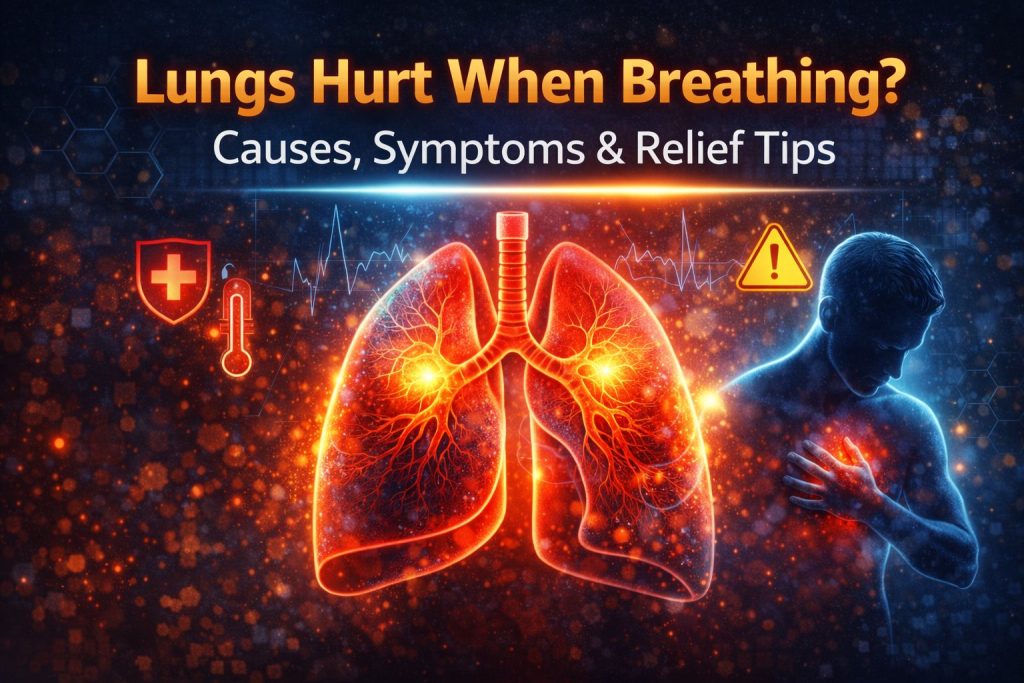
If your lungs hurt when breathing, it can feel alarming. You may notice a sharp pain when breathing in, discomfort while coughing, or chest pain that worsens with deep breaths. Sometimes the pain is mild and temporary. Other times, it may signal a condition that requires urgent medical attention.
The key is understanding the pattern of your symptoms.
This guide explains why breathing can become painful, the difference between minor and serious causes, what symptoms to watch for, and when to seek medical care.
Important: This article provides general information and is not a substitute for professional medical advice.
Why Do Lungs Hurt When Breathing?
Interestingly, the lungs themselves do not have many pain receptors. In most cases, what people describe as pain in lungs when breathing actually comes from:
The lining around the lungs (pleura)
The chest wall muscles
The ribs or cartilage
The heart
The esophagus
Pain that worsens with deep breathing is often called pleuritic pain. It usually feels sharp or stabbing and becomes more noticeable when you inhale deeply, cough, sneeze, or move.
Common Causes of Chest Pain When Breathing
1. Pleurisy (Inflammation of the Lung Lining)
Pleurisy is one of the most common causes of painful breathing (painful respiration). It happens when the thin tissue layers surrounding the lungs become inflamed.
Symptoms may include:
Sharp pain when breathing in
Pain that worsens with coughing
Sometimes fever or recent infection
The pain is often described as stabbing and may improve when holding your breath or lying still.
2. Respiratory Infections (Bronchitis or Pneumonia)
Infections can inflame lung tissue and airways, causing discomfort when breathing deeply.
Other signs may include:
Fever or chills
Persistent cough
Fatigue
Shortness of breath
If symptoms worsen quickly or breathing becomes difficult, immediate medical evaluation is important.
3. Muscle Strain or Rib Injury
Not all breathing pain originates from the lungs. Sometimes it’s a strained muscle between the ribs or irritation in the chest wall.
This is common after:
Heavy lifting
Intense coughing
Physical exercise
Sudden twisting movements
Clue: If the area hurts when pressed or when moving in certain ways, it’s likely muscular.
4. Costochondritis
Costochondritis is inflammation of the cartilage connecting ribs to the breastbone. It can cause localized chest pain that worsens with movement or deep breaths.
The pain may feel sharp but is typically not life-threatening.
5. Acid Reflux (GERD)
Sometimes what feels like lung pain is actually irritation in the esophagus due to acid reflux.
Common signs:
Burning sensation in chest
Sour taste in mouth
Pain after meals
Symptoms worsen when lying down
Serious Causes That Need Immediate Attention
Some causes of lungs hurt when breathing can be dangerous and require urgent care.
6. Pulmonary Embolism (Blood Clot in Lung)
A blood clot can block blood flow in the lungs.
Symptoms may include:
Sudden sharp chest pain
Shortness of breath
Rapid heartbeat
Dizziness
Leg swelling
This is a medical emergency.
7. Pneumothorax (Collapsed Lung)
Air leaking into the space around the lung can cause sudden one-sided chest pain and difficulty breathing.
It may occur:
After injury
Spontaneously in tall, thin individuals
In people with lung disease
Immediate medical care is required.
8. Heart Conditions
Some heart problems can cause chest pain that worsens with breathing or movement.
Seek urgent care if pain is accompanied by:
Chest pressure or tightness
Sweating
Nausea
Pain spreading to jaw, arm, or back
Severe shortness of breath
Red Flag Symptoms: When to Seek Emergency Care
Call emergency services immediately if you experience:
Severe or crushing chest pain
Fainting or confusion
Blue lips or face
Coughing up blood
Sudden severe shortness of breath
Rapid heartbeat with dizziness
Even if symptoms seem mild, worsening pain or breathing difficulty should never be ignored.
How to Identify the Type of Pain
Understanding the nature of your pain helps determine its cause.
Ask yourself:
Did the pain start suddenly or gradually?
Is it sharp, burning, pressure-like, or dull?
Does it worsen with movement or only with breathing?
Is there a fever or cough?
Did it begin after injury or exercise?
Sharp Pain When Breathing In
Often linked to pleurisy, infection, muscle strain, or sometimes more serious lung issues.
Burning Chest Pain
May suggest acid reflux.
Pressure or Tightness
Can indicate heart-related causes and requires urgent evaluation.
What You Can Safely Try at Home
If symptoms are mild and there are no emergency signs, these steps may help:
1. Rest
Avoid heavy lifting or strenuous activity.
2. Adjust Position
Lying on the painful side may reduce pleuritic discomfort.
3. Over-the-Counter Pain Relief
If safe for you, anti-inflammatory medications may reduce mild inflammation.
Always follow label instructions and consult a professional if unsure.
4. Stay Hydrated
Fluids help during respiratory infections.
5. Avoid Smoking
Smoking worsens inflammation and lung irritation.
If symptoms persist longer than 1–2 days or worsen, seek medical advice.
How Doctors Diagnose Painful Breathing
Depending on symptoms, evaluation may include:
Physical examination
Oxygen level check
Chest X-ray
ECG (heart rhythm test)
Blood tests
CT scan (if clot or lung collapse suspected)
The priority is to rule out life-threatening conditions first.
Treatment Options
Treatment depends entirely on the underlying cause.
Infections: Antibiotics (if bacterial) or supportive care
Pleurisy: Anti-inflammatory treatment and treating underlying cause
Muscle strain: Rest and pain management
Acid reflux: Diet changes and acid-reducing medication
Pulmonary embolism: Emergency blood thinners
Collapsed lung: Medical intervention
Never self-diagnose severe or persistent chest pain.
Can Anxiety Cause Pain When Breathing?
Yes. Anxiety can cause rapid breathing and muscle tension in the chest wall. This may feel like sharp or tight chest pain.
However, anxiety should only be considered after serious causes are ruled out by a healthcare provider.
How to Reduce Risk of Breathing-Related Chest Pain
Stay active but avoid overexertion
Maintain healthy posture
Avoid smoking
Manage acid reflux triggers
Seek early treatment for respiratory infections
Move regularly during long travel to prevent clots
Frequently Asked Questions (FAQ)
1. Why do my lungs hurt when I take a deep breath?
Pain when taking a deep breath is often caused by inflammation of the lung lining (pleurisy), muscle strain, or infection. Sharp pain that worsens with inhaling should be evaluated if persistent.
2. Is chest pain when breathing always serious?
Not always. It can be caused by muscle strain or mild infections. However, severe, sudden, or worsening pain requires immediate medical attention.
3. What are pleurisy symptoms?
Pleurisy symptoms include sharp chest pain when breathing in, coughing, or sneezing. Some people also experience fever or shortness of breath.
4. Can acid reflux cause pain when breathing?
Yes. Acid reflux can cause chest discomfort that sometimes feels worse with deep breathing or lying down.
5. When should I go to the hospital for breathing pain?
Seek emergency care if pain is severe, sudden, associated with shortness of breath, fainting, rapid heartbeat, or coughing blood.
Final Thoughts
When your lungs hurt when breathing, the cause can range from something minor like a muscle strain to more serious conditions such as infection or blood clots. The key is paying attention to symptom patterns and acting quickly if red flags appear.
Breathing pain should never be ignored — especially if it is sudden, severe, or accompanied by other concerning symptoms.
If you’re unsure, it’s always safer to seek medical evaluation than to wait.
Related posts:
 What Is the Average Height for Men in the US? (2026 Update)
  Bad Mental Health: Understanding, Managing, and Overcoming Emotional Struggles in 2026
  Pea vs Whey Protein: What You Need to Know in 2026
  Articles About Mental Health: What Everyone Should Know in 2026
  Bioma Reviews 2026 – Is This Gut Health Supplement Worth It?
  Nutrafol Reviews 2026 – Does This Hair Growth Supplement Really Work?
  Il Makiage Reviews 2026: Real Results, Shade Match & Before-After Guide
  Primal Queen Reviews 2026: Is It Worth the Hype? A Complete Guide for Global Consumers
  White Lumps on Tonsils and Sore Throat: Causes, Symptoms & Treatment (2026 Guide)

看不懂但大受震撼
Very good i like it
Stackshine https://en.stackshine.io simplifies SaaS spend management with full software visibility, renewal tracking, and employee offboarding automation. Reduce costs, eliminate unused tools, and gain control over subscriptions with a smarter, centralized platform.
offices for rent nyc https://offices-rent-nyc.com
Профессиональная: оклейка автомобиля пленкой – сохраните родное лакокрасочное покрытие в идеальном состоянии на долгие годы.
пин ап онлайн казино https://cafemcity.ru
pin up игровые автоматы пинап
пинап казино вход casino pin up
фильмы смотреть онлайн 2026 смотреть фильмы онлайн без подписки бесплатно
дизайн интерьера дома фото https://center-bereg.ru/vybor-dizajnera-interera-v-spb-ot-poiska-speczialista-do-analiza-dokumentov.html
казино онлайн пин ап https://school7-kirishi.ru
промокод алиэкспресс комбо промокод aliexpress бесплатно
Volvo в Україні експертний сервіс екскаватори, фронтальні навантажувачі та дорожні машини. Надійність, ефективність і сучасні рішення для будівництва. Продаж, підбір і обслуговування техніки для бізнесу.
Нужен займ? https://tvojbank.ru быстрые деньги без лишних документов. Высокий процент одобрения, моментальные выплаты и удобная заявка. Сравните предложения МФО и выберите выгодные условия для получения займа.
Music cover art https://cover-art-design.ru
Music lovers deep house playlist discover new genres and curated playlists for every occasion completely free.
казино онлайн пин ап pin up казино официальный сайт