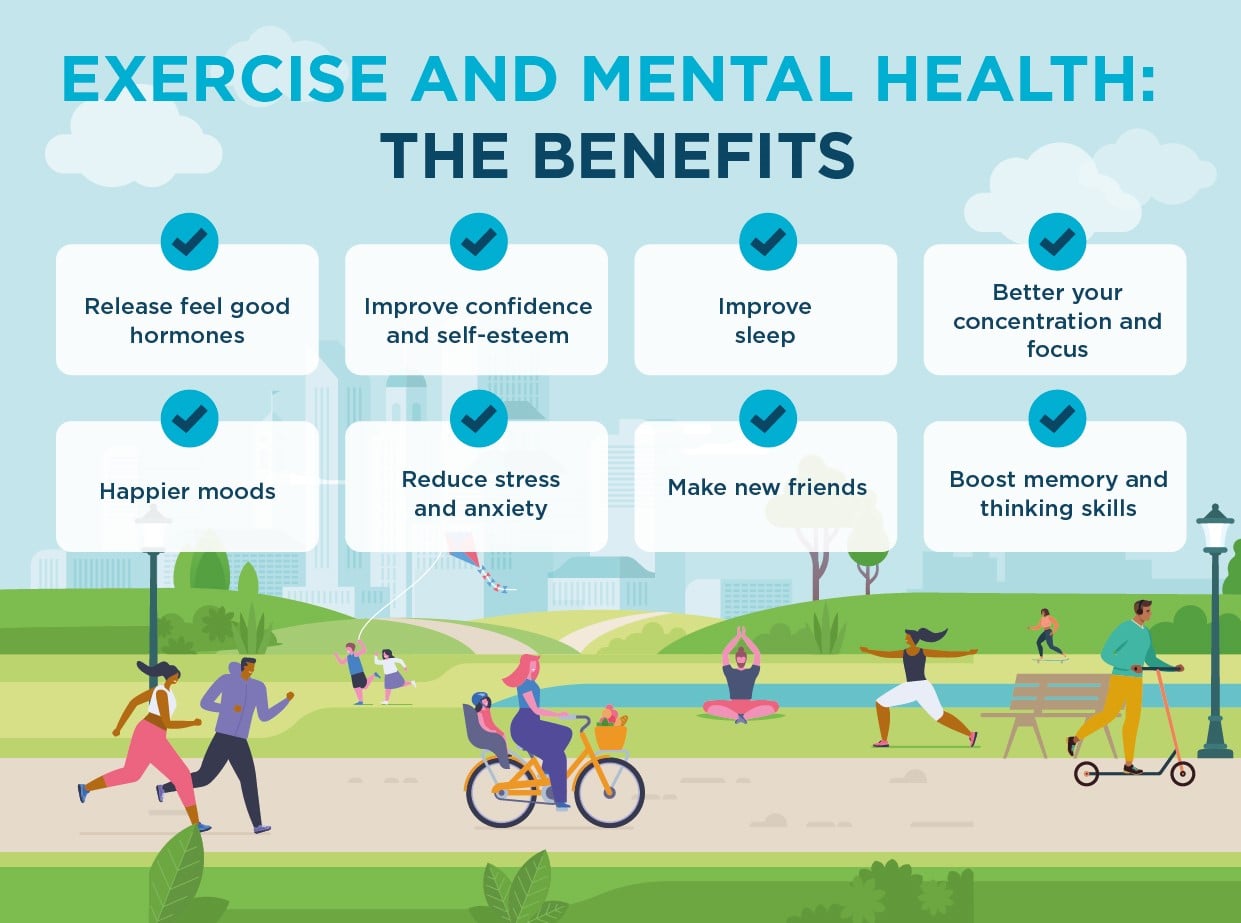
Have you ever noticed how even a short walk can instantly make you feel lighter, calmer, and more focused? That’s not a coincidence. The benefits of exercise on mental health are now more widely researched than ever, and with lifestyle stress rising globally in 2026, people of all ages are turning to movement as a natural, science-backed mental wellness strategy.
Whether you’re an adult juggling work, a senior looking to stay active, a parent managing daily stress, or a fitness beginner trying to feel better in your own body—exercise may be one of the most powerful tools available.
In this guide, you’ll discover how physical activity boosts mental well-being, current fitness trends, and simple ways to add movement to your daily routine.
Why Physical Activity Matters for Mental Health
The benefits of exercise on mental health start with its powerful effect on the brain. When you move your body, you’re not just burning calories—you’re triggering biological processes that improve your emotional and psychological well-being.
How Exercise Impacts the Brain
Regular movement promotes neurogenesis, meaning it helps the brain grow new cells. This is essential for better mood stability, memory, and learning.
The Role of Hormones & Neurotransmitters
Exercise increases:
-
Endorphins – natural mood boosters
-
Serotonin – regulates happiness
-
Dopamine – motivation and reward
-
Norepinephrine – improves focus
These chemicals help reduce feelings of stress and anxiety.
Breaking the Stress Cycle
When stress accumulates, your body enters a state of tension. Exercise disrupts this cycle by relaxing muscles, improving circulation, and clearing mental fog.
Top Benefits of Exercise on Mental Health
1. Reduced Anxiety and Stress
One of the most well-known benefits of exercise on mental health is its ability to calm the nervous system. Activities such as walking, cycling, and yoga lower cortisol (the stress hormone).
Try this:
-
20–30 minutes of brisk walking daily
-
10-minute breathing or stretch breaks between tasks
2. Improvement in Depression Symptoms
Research consistently shows that exercise can be as effective as some traditional treatments for mild-to-moderate depression. Movement increases serotonin and dopamine levels—two essential chemicals tied to emotional regulation.
3. Better Sleep Quality
Insomnia and poor sleep often worsen mental health. Exercise helps regulate your circadian rhythm, making it easier to fall asleep and stay asleep.
Best choices:
-
Light evening walks
-
Morning cardio
-
Gentle yoga before bed
4. Higher Self-Esteem and Confidence
When you exercise regularly, you build physical strength and gain a sense of accomplishment. This instantly boosts self-image and emotional resilience.
5. Enhanced Cognitive Function
Exercise strengthens the hippocampus—a part of the brain tied to memory and learning. It also improves decision-making, problem-solving, and concentration.
Current Exercise & Mental Wellness Trends in 2026
Low-Intensity Workouts Rise in Popularity
In 2026, slow and mindful workouts such as pilates, stretching flows, mobility training, and tai chi are trending globally. They reduce stress and are ideal for people who want gentle, sustainable routines.
Smart Wellness Devices and Apps
AI-powered platforms analyze stress patterns, sleep cycles, and mood to recommend personalized workout plans. These tools are especially popular among adults balancing busy schedules.
Community Fitness for Emotional Support
Group classes—both in-person and virtual—are expanding because social connection is a key component of mental wellness. Seniors and parents particularly benefit from these supportive environments.
Best Types of Exercise for Mental Well-Being
Cardio Workouts
Running, swimming, dancing, or cycling boosts circulation and releases endorphins quickly.
Mental health benefits:
-
Immediate mood lift
-
Improved focus
-
Reduced anxiety
Strength Training
Lifting weights or doing resistance exercises builds physical and emotional strength.
Why it works:
-
Enhances confidence
-
Improves brain function
-
Reduces chronic stress
Yoga, Pilates & Mindfulness-Based Movement
These forms combine physical activity with breathing techniques and mindfulness.
Benefits:
-
Lower cortisol
-
Reduced anxiety
-
Better emotional regulation
Outdoor Exercise & Nature Therapy
Walking or exercising outdoors exposes you to sunlight, fresh air, and natural environments—elements proven to reduce depression and mental fatigue.
Practical Tips to Start and Maintain an Exercise Routine
For Fitness Beginners
-
Start with 10–15 minutes daily
-
Choose activities you genuinely enjoy
-
Increase duration gradually
-
Track progress to stay motivated
For Adults With Busy Schedules
-
Try “exercise snacks”: 5-minute bursts throughout the day
-
Use standing desks, stretch bands, or walking meetings
-
Schedule workouts like appointments
For Parents
-
Join kid-friendly workouts
-
Use stroller walks
-
Try home workouts during nap time
For Seniors
-
Focus on low-impact options: tai chi, swimming, walking
-
Prioritize balance and mobility exercises
-
Consult a doctor for personalized guidance
Creating a Balanced Weekly Plan
A healthy mix might include:
-
3 days cardio
-
2 days strength training
-
2 days flexibility or yoga
-
Daily 10-minute mindfulness practice
FAQs About Exercise and Mental Health
1. How often should I exercise to see mental health benefits?
Most people notice improvements with 20–30 minutes of exercise, 3–5 days per week.
2. Can exercise replace therapy or medication?
Not always. Exercise is a powerful complementary tool, but severe conditions often require professional treatment.
3. What type of exercise is best for reducing anxiety?
Low-intensity workouts like yoga, pilates, walking, and cycling significantly reduce anxiety.
4. Does exercise help with focus and concentration?
Yes. Regular movement improves blood flow to the brain, enhancing cognitive function, memory, and learning.
5. Is outdoor exercise better than indoor workouts?
Both offer benefits, but outdoor workouts provide added perks like sunlight exposure and nature-based stress relief.
Conclusion: Start Moving Today for a Healthier Mind
The benefits of exercise on mental health extend far beyond physical changes. From boosting mood and reducing stress to improving sleep and cognitive performance, movement is a powerful wellness tool for people of all ages.
In 2026, with digital stress increasing and wellness trends evolving, there has never been a better time to embrace an active lifestyle.
Ready to improve your mental well-being?
Start with one small step today—your mind and body will thank you.
Related posts:
 Donald Trump For Nobel Peace Prize? Americans Say In One Voice
 What Is Economics? A Friendly Guide for Young Professionals & Entrepreneurs
 When Are Taxes Due? Essential Tax Deadlines
 What Is Martial Law? Definition, Examples & Implications
 What Is Communism? Complete Guide to Understanding This Economic System
 When Was the Great Depression? A Complete Breakdown
 AI Mental Health: Smarter Emotional Wellness in 2026
 How Do AI Detectors Work in 2026? A Complete Guide for Tech and Everyday Users
 Recent News Entertainment: What’s Hot in 2026 Pop Culture