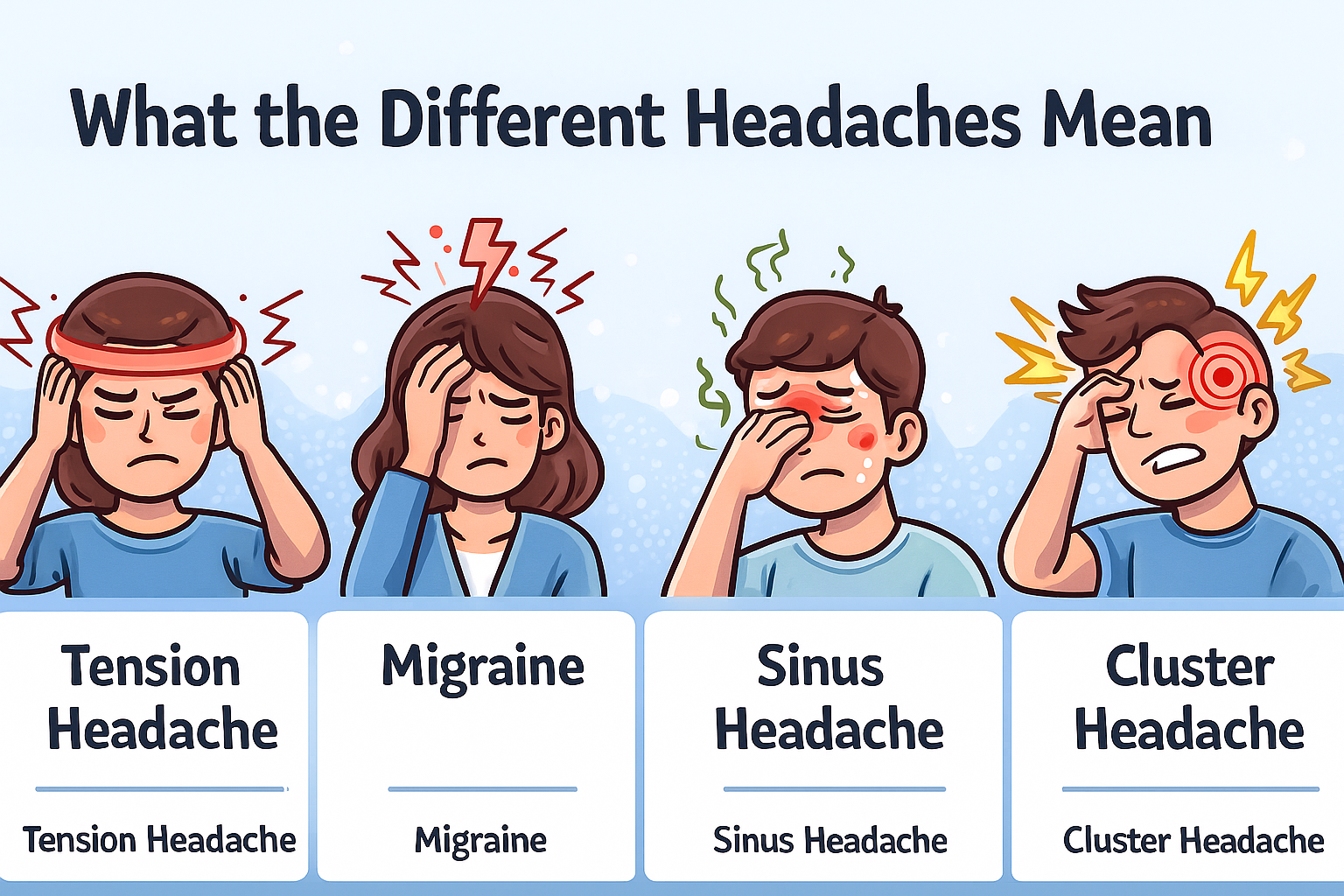
Have you ever wondered what the different headaches mean and why some feel like a tight band around your head while others deliver sharp, throbbing pain behind your eyes? You’re not alone. Headaches affect nearly three out of every four adults worldwide, and understanding their cause is the first step to managing them effectively.
In today’s fast-paced world—especially heading into 2026, where screen time, stress levels, and sleep problems continue to rise—knowing the meaning behind your headaches is more important than ever.
This friendly, easy-to-read guide breaks down common headache types, causes, symptoms, prevention tips, trends, and when to seek medical help.
1. Understanding What the Different Headaches Mean
Understanding what the different headaches mean helps you identify whether your discomfort is due to tension, dehydration, hormones, allergies, or something more serious. Not all headaches are created equal—each carries unique patterns, locations, triggers, and intensity levels.
Why Identifying Your Headache Type Matters
Different headaches require different approaches. For example:
-
A tension headache may improve with stretching and hydration.
-
A migraine may need dark rooms or medication.
-
A sinus headache requires addressing nasal congestion or allergies.
Correct recognition = faster, more effective relief.
Current Trends in Headache Triggers (2026 Update)
In 2026, trends show that headaches are increasingly linked to:
-
Increased digital screen exposure (remote work + AI tools)
-
Poor posture from handheld device overuse
-
Chronic stress due to economic and lifestyle shifts
-
Blue-light disruption of sleep cycles
-
Wearable tech alerts helping users detect tension earlier
Knowing what’s triggering your headaches empowers you to act before the pain escalates.
2. The Most Common Types of Headaches
Tension Headaches
The most common type—affecting almost all adults at some point.
Symptoms
-
Dull, aching pressure
-
Tightness like a “band” across the forehead
-
Pain in neck and shoulders
Common causes
-
Stress
-
Long hours at a computer
-
Poor posture
-
Eye strain
Relief
-
Stretching and posture correction
-
Warm showers
-
Over-the-counter pain relievers
-
Hydration
Migraines
Migraines are more intense and often disruptive.
Symptoms
-
Throbbing pain (often one-sided)
-
Sensitivity to light & sound
-
Nausea or vomiting
-
Visual disturbances (auras)
Common triggers
-
Hormonal changes
-
Strong smells
-
Certain foods (chocolate, cheese, alcohol)
-
Stress or fatigue
-
Weather changes
Relief and prevention
-
Medication (triptans, CGRP inhibitors)
-
Dark, quiet room
-
Cold compresses
-
Avoiding dietary triggers
-
Regular sleep schedule
Cluster Headaches
Less common but extremely painful.
Symptoms
-
Sharp, burning pain around one eye
-
Tearing, redness
-
Stuffy nose on one side
-
Occur in “clusters” for weeks or months
Relief
-
Prescription oxygen therapy
-
Preventive medications
Sinus Headaches
Linked to sinus inflammation or allergies.
Symptoms
-
Pressure around cheeks, forehead, or eyes
-
Runny or stuffy nose
-
Pain worsens when bending forward
Triggers
-
Seasonal allergies
-
Infections
-
Cold climates
Treatment
-
Nasal decongestants
-
Steam inhalation
-
Antihistamines
Hormonal Headaches
Common among women.
Triggers
-
Menstrual cycle
-
Pregnancy
-
Birth control changes
-
Perimenopause
Relief
Rebound (Medication-Overuse) Headaches
Caused by frequent painkiller use.
Risk medications
-
Ibuprofen
-
Acetaminophen
-
Aspirin
-
Caffeine-containing headache pills
Relief
-
Gradually reducing overused medications
-
Doctor-guided detox plan
3. How Lifestyle, Nutrition & Fitness Affect Headaches
Our lifestyle has one of the biggest influences on headache frequency and intensity.
Nutrition Triggers
Some foods can cause headaches or migraines:
-
Alcohol (especially red wine)
-
Chocolate
-
Processed meats (nitrites)
-
Aged cheeses
-
Artificial sweeteners (aspartame)
-
Caffeine—too much or too little
Tips
-
Keep a headache diary
-
Eat small, balanced meals
-
Increase magnesium-rich foods
Sedentary Lifestyle
Sitting for long periods = muscle stiffness + reduced circulation.
Try:
-
3–5 minute breaks every hour
-
Gentle neck and shoulder stretches
Sleep and Circadian Rhythm
Both lack of sleep and oversleeping can cause headaches.
Better sleep practices:
-
Keep a consistent schedule
-
Reduce blue light after 8 PM
-
Keep your room cool
-
Avoid heavy meals before bed
Hydration Habits
Dehydration is one of the most overlooked causes.
Signs you need water:
-
Dry mouth
-
Head pressure
-
Fatigue
Aim for 6–8 glasses daily, more if active.
4. Preventing Headaches in 2026
Digital Health Trends
With the rise of wearable AI devices in 2026, users are tracking:
-
Muscle tension
-
Posture
-
Sleep quality
-
Stress markers
These technologies help predict headaches before they strike.
Stress-Management Tools
Try:
-
Meditation apps
-
Breathing exercises
-
Short daily walks
-
Talking to a therapist
-
Journaling
Fitness & Daily Movement
Exercise improves blood flow and reduces stress hormones.
Helpful activities:
-
Yoga
-
Pilates
-
Swimming
-
Cycling
-
Strength training
-
10,000 steps/day
Mindfulness & Mental Wellness
Headaches often worsen with anxiety and mental overload.
Try mindfulness:
-
Gratitude lists
-
Grounding techniques
-
Body-scanning meditations
They help calm the nervous system and reduce tension.
5. When You Should See a Doctor
Most headaches aren’t dangerous, but some may signal serious conditions.
Red-Flag Symptoms
Seek medical help if headaches are:
-
Sudden and severe (“thunderclap”)
-
Accompanied by vision changes
-
After a head injury
-
Paired with weakness or confusion
-
More frequent or intense than usual
-
Occurring with fever or stiff neck
Possible Tests
Doctors may use:
-
Blood tests
-
CT scans
-
MRI
-
Neurological exams
-
Allergy evaluations
6. Frequently Asked Questions
1. What do different headaches mean in simple terms?
They indicate different underlying causes—tension, dehydration, allergies, hormones, stress, or neurological issues.
2. Can headaches be caused by dehydration?
Yes, dehydration is one of the most common and overlooked headache triggers.
3. Why do I get headaches every day?
Daily headaches may be due to stress, medication overuse, poor posture, or underlying health issues. A doctor should evaluate chronic headaches.
4. Are migraines serious?
Migraines aren’t usually dangerous, but they can severely affect quality of life. Proper treatment helps manage symptoms.
5. How do I know if my headache is from lack of sleep?
If your headache appears in the morning or after restless sleep, it may be connected to sleeping habits or circadian disruption.
7. Conclusion + Strong CTA
Understanding what the different headaches mean is the key to finding relief, preventing future episodes, and improving your daily health. With rising stress levels and digital lifestyles in 2026, it’s more important than ever to recognize your symptoms, adjust your habits, and take control of your well-being.
👉 If headaches are affecting your life, start tracking your triggers, adjust your lifestyle, and speak with a healthcare professional for personalized care. Your health matters—take the first step today!
Related posts:
 AI Mental Health: Smarter Emotional Wellness in 2026
 What Is the Average Height for Men in the US? (2026 Update)
 Bad Mental Health: Understanding, Managing, and Overcoming Emotional Struggles in 2026
 Pea vs Whey Protein: What You Need to Know in 2026
 Articles About Mental Health: What Everyone Should Know in 2026
 Bioma Reviews 2026 – Is This Gut Health Supplement Worth It?
 Nutrafol Reviews 2026 – Does This Hair Growth Supplement Really Work?
 Il Makiage Reviews 2026: Real Results, Shade Match & Before-After Guide
 What Is a Bad Heart Rate? A Complete 2026 Guide for All Ages